
Oil, Force, and Empire: The Real Meaning of America First
For years, Donald Trump and the MAGA movement have repeated two slogans with near-ritual devotion: “America First” and non-interventionism. The United States, they claimed, would stop acting as the world’s policeman. No more foreign entanglements. No more regime change. No more wars that didn’t directly benefit Americans.
Recent events expose this as political theater.
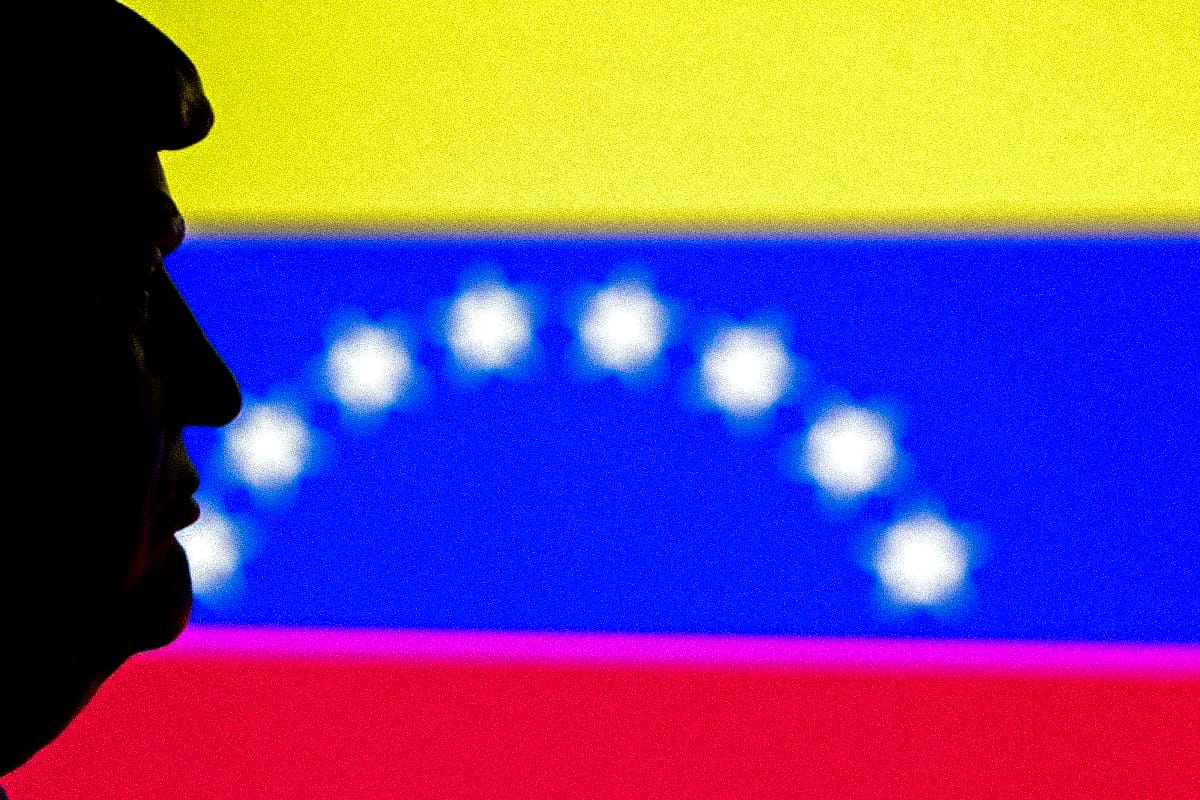
After U.S. military strikes on Iranian targets in June and the latest operation in Caracas that reportedly resulted in the capture of Venezuela’s president, it is now undeniable that the United States has not abandoned interventionism. It has simply stripped it of its moral camouflage.
The Drug War as Alibi: A Case of Blatant Gaslighting
Washington’s official justification for acting against Venezuela is that the country constitutes a narco-terrorist statethreatening U.S. security. This claim functions less as an explanation than as an alibi.
There is no credible evidence that Venezuela is a major source of drugs entering the United States. The overwhelming bulk of narcotics—particularly fentanyl, the drug fueling a lethal epidemic—enters through Mexico, a fact acknowledged for years by U.S. authorities themselves.
The drug narrative becomes outright absurd when placed next to Trump’s own actions. He pardoned Juan Orlando Hernández, the former president of Honduras, after Hernández was convicted in U.S. courts of running a drug cartel. The message was unmistakable: drug trafficking is unforgivable—unless the perpetrator serves U.S. interests.
If drugs were truly the reason, Venezuela would hardly top the list. The accusation is not evidence-based; it is politically convenient.
Still Not About Democracy
Nor is this intervention about freeing Venezuelans from authoritarian rule. If tyranny were the trigger, Washington would be compelled to confront a long list of autocrats it currently arms, funds, or diplomatically shields.
Democracy is not the principle here. It is a slogan deployed selectively, abandoned the moment it conflicts with strategic or economic priorities.
Oil: The Motive Trump Doesn’t Even Try to Hide
Unlike previous administrations, Trump does not even pretend that oil is secondary.
Venezuela holds the largest proven oil reserves in the world, and Trump has repeatedly framed foreign policy through the lens of “taking” or “securing” resources rather than upholding international norms. In this case, that mindset translated directly into action.
Trump reportedly briefed U.S. oil executives before and after the operation, while bypassing Congress and excluding Democratic lawmakers altogether. This was not treated as a national-security emergency requiring democratic oversight, but as a business-aligned strategic maneuver.
In other words, the priorities were not hidden behind diplomatic language. They were laid out plainly: control who governs Venezuela, control who controls its oil.
This is not speculation—it is consistency. Trump has repeatedly argued that U.S. power should be used to extract tangible economic benefits. Venezuela fits that logic perfectly.
Reasserting Control of the Western Hemisphere
Oil alone, however, does not explain the urgency.
The intervention also reflects a renewed and unapologetic enforcement of U.S. dominance over the Western Hemisphere. The Monroe Doctrine may be old, but under Trump it has been resurrected in its most aggressive form.
Reports of increasing engagement between Venezuela and China appear to have accelerated Washington’s decision-making. Allowing a rival power to gain strategic and economic influence in South America was deemed unacceptable.
Rather than competing diplomatically or economically, the United States chose force. The alliance was crushed before it could mature.
A Message to Others: Sovereignty Is Conditional
This operation was never meant to be seen as isolated.
Trump has already issued warnings—sometimes explicit, sometimes implicit—toward Mexico, Colombia, Cuba, and even Greenland, all justified under the elastic label of “national security.”
The message is clear: sovereignty exists only insofar as it aligns with U.S. interests. Defiance invites punishment. Compliance brings protection.
The Bigger Picture: The End of the Rules-Based Illusion
There may be no formal invasion of Venezuela, but the precedent is unmistakable. The United States is openly demonstrating that international law, multilateral institutions, and diplomatic norms are optional.
Under Trump, the idea of a rules-based international order is not merely weakened—it is openly mocked. What replaces it is brutally simple: power decides. Military strength and economic leverage determine outcomes. Moral arguments are improvised afterward.
Europe’s Strategic Reckoning
For Europe, this should be a moment of clarity.
The United States is no longer a partner anchored by shared rules and predictability. It is increasingly a unilateral actor driven by raw interest, domestic political theater, and corporate priorities—even when those collide with European interests.
Continuing to romanticize the transatlantic relationship is no longer naïve; it is self-destructive. If Europe does not urgently build genuine strategic autonomy—military, economic, and political—it risks fading into irrelevance in a world that has returned to spheres of power.
Venezuela is not an anomaly.
It is the model.
Comments ()