
Why Luxembourg Needs the “Tax Wealth, Not Work” Movement Now
Luxembourg stands at a crossroads. For decades, Western economies have followed a path that has steadily widened the gap between those who own wealth and those who live from their work. Since the financialisation era of the 1980s—shaped by Reagan- and Thatcher-style policies—wealth accumulation has increasingly favored asset owners, while wages have failed to keep pace with rising costs of living. Today, this imbalance has reached a point where social cohesion, democratic legitimacy, and long-term prosperity are at risk.
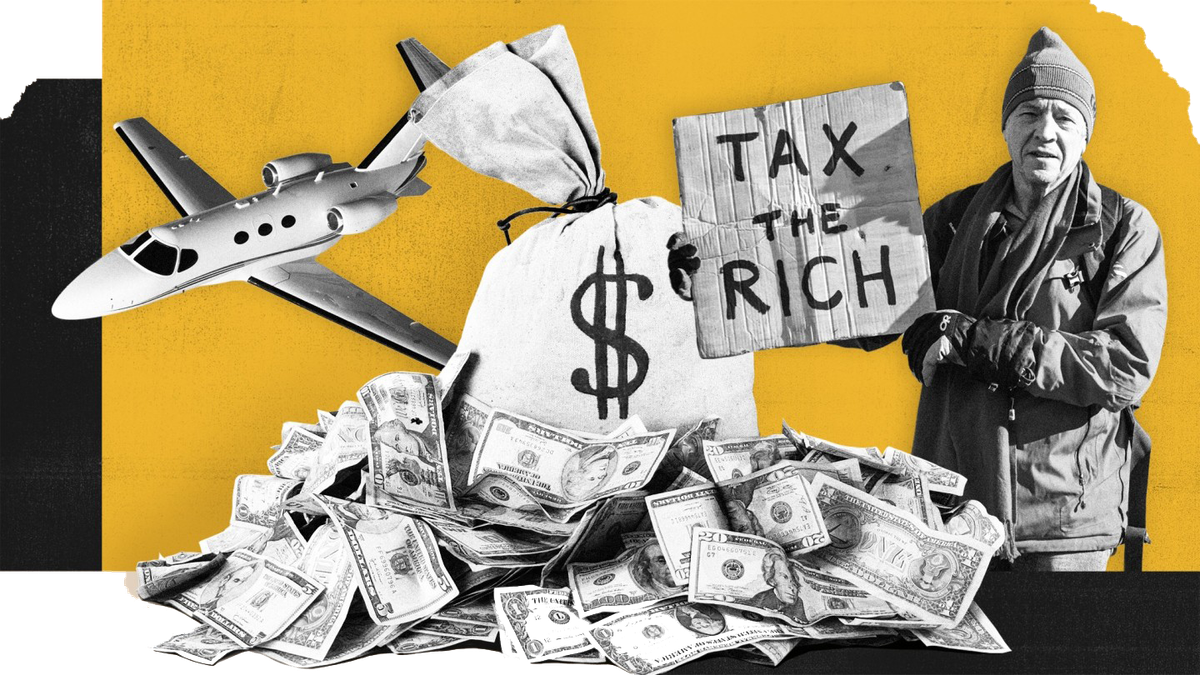
The slogan “Tax wealth, not work” captures a simple but powerful truth: labor is taxed heavily, while accumulated wealth—especially at the very top—often escapes fair contribution. In Luxembourg, as in much of Europe and the United States, the top 1% owns a growing share of assets, while the middle and working classes are being priced out of markets that once enabled upward mobility.
A clear example is housing. Home ownership, traditionally a cornerstone of financial security and social stability, is becoming unattainable for many. Large institutional investors and asset managers are buying up housing stock at scale, treating homes not as places to live but as financial instruments. When global capital competes with local wages, the outcome is predictable: ordinary people lose. Without intervention, owning a home through one’s work will increasingly become a privilege rather than a norm.
At the same time, states are becoming more indebted. Instead of financing public goods—such as infrastructure, pensions, healthcare, and education—by fairly taxing accumulated wealth, governments borrow money, often from the very elites whose wealth continues to grow. This creates a dangerous dependency: political decision-making becomes constrained by the interests of creditors and powerful economic actors. This trend, visible since the 1980s, has led to a paradox where the richest segments grow richer while public finances deteriorate, shifting the burden onto future generations.
The consequences are already visible. Governments struggle to fund pension reforms, social mobility declines, and meaningful structural reform becomes politically difficult. Social unrest rises, not because people reject democracy, but because they feel it no longer delivers fairness. The political center—both center-left and center-right—has so far failed to propose credible solutions to wealth inequality, leading to widespread frustration.
This frustration is increasingly exploited by fringe and far-right movements. Their messaging is often simple and emotionally powerful, but frequently misdirected. Immigration, while imperfectly managed in parts of Europe, is not the primary driver of today’s economic insecurity. Yet it is easier to wage cultural battles than to confront concentrated wealth. Unsurprisingly, some wealthy actors support right-wing movements that shift public discourse away from economic justice toward divisive culture wars—a classic strategy of divide and conquer.
If Luxembourg and Europe want to change course, the path forward must be grounded in data, honesty, and courage. We must acknowledge that unchecked corporate greed and extreme wealth concentration are structural problems—not moral failures of individuals, but outcomes of policy choices. Taxing wealth fairly is not about punishment; it is about sustainability, democratic independence, and shared prosperity.
By 2026, the “Tax Wealth, Not Work” movement should stand at the center of political debate in Luxembourg. Not as an ideological slogan, but as a necessary correction to decades of imbalance. A society that rewards work, limits excessive concentration of power, and invests in its future is not radical—it is resilient. And without such a shift, lasting prosperity in Europe will remain out of reach.
Comments ()